
Imagine. You’re in a moderately successful relationship. It has been going on for a couple of weeks now, and things seem to be going great. For starters, the guy always sends you a good morning and good night message. He never fails! The next thing is that he always makes time for you. He always plans cute dates, and he never seems too busy to make time for you. He also knows how to handle conflict when it arises in your relationship. When you get into an argument, he is sensitive; he listens to you, and he responds in a way that shows you that he’s paying attention. You tend to resolve all your conflicts.
This happened to a lady, and it seems beautiful. The problem was that it turned out that her boyfriend was using an AI agent to manage their relationship. It was like he was using LoveGPT or CupidGPT to do all those things that she thought were cute. In fact, when she got to thinking about it, his dating profile photo seemed like a more polished version of what he really looked like in real life.
When I heard this story, I was shocked and tempted.
I was shocked because I had never thought of using an AI agent to manage my own marriage. It would probably do better at managing conflict than I usually do.
I was tempted to use an AI agent to run the Toastmasters club when I was elected as Watabaruku Advanced’s president last year. This temptation was strong because I was coming from a period where I had been Program Quality Director and then District Director. By the time I was taking over the club presidency, I was feeling burnt out.
Beyond that, though, there are other things that all members of Toastmasters experience when they commit to their Toastmasters journey. These are the things that happen in your life and might take your attention away from the commitment you’ve made.
For example, you might get accepted to a fellowship or receive a scholarship to advance your education. You are definitely not going to forgo that opportunity. You might also get promoted, or you might be transferred to a different part of the country or to a different country in a move that advances your career. You wouldn’t say no to that opportunity. Or you might use CupidGPT a little bit too well, and you and your spouse end up expecting a baby that you had not planned for.
The question that all Toastmasters members and leaders usually have to face is: How are you going to prioritize something that is naturally not going to be your highest priority?
The answer is simple. Not really simple-simple, but simple.
Let me use an example from communication. When you say that a message is simple, it means that you have gotten to the core of it. You’ve gotten to the most important part of that message, and you’ve highlighted it so that nobody can miss it. When the core of a message has been brought out, that is a simple message.
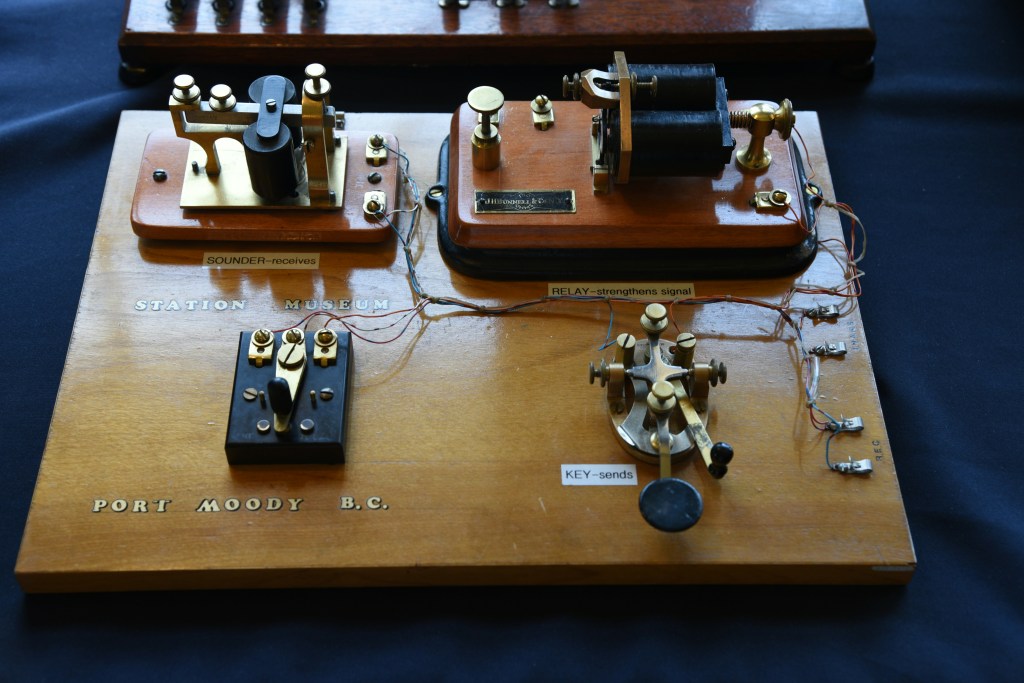
Let me further illustrate this with how people used to communicate during the Civil War in America. They used to use the telegraph, and the thing about telegrams was that as the Morse code was being sent out, there was a possibility that the message might get interrupted. And so the most important parts of that message needed to be sent out first. Even though a message might be delivered partially, the core would not be missed.
And so, for example, if you were expecting an attack, the first sentence would be, “Send reinforcements immediately. The enemy is advancing toward our position.” If the message was cut off at that point in time, the high command would know that you needed help. Every bit of the message is important and beneficial to the high command in making the decision, but not every part is crucial.
The lesson is that you cannot prioritize everything. You need to pick out the most crucial thing.
That is exactly what we would need to do as Toastmasters when leading. We need to separate the crucial from the beneficial, from the nice-to-have. And when we do that, we need to do the crucial tasks as well as possible.
At the beginning of my term, I, of course, didn’t have this epiphany. We created a club success plan, and I had a very long to-do list. But as time went by, life happened; other commitments started to pull my attention.
I could have reacted like we tend to. I could have considered everything important, and I would have come to the conclusion that I would either do everything or do nothing. I would have just ghosted the club.
However, after weeks of struggling and to-do items falling between the cracks, I realized that I needed to simplify my role. To do this, I asked the question: If I could do nothing else this year, what was the thing that I must do?
First, we needed to have regular ExCo meetings. We also needed to have a succession plan. We had to invite guests and members and then thank them when they came. Finally, we had to provide a fun experience for the members and the guests when they attended our meetings. Those were the simple things that we needed to do, and I needed to do them very well.
In Toastmasters, we say, “This is where leaders are made,” and we are made leaders through applying ourselves to the roles that we sign up for. To grow as a leader, you need to stick with the role despite the competing challenges.
What I learned from leading the club is that not everything needs to be done. Leadership is mostly the art of doing simple things very well. And by simple things, I mean picking out the crucial items and then focusing on them with all your effort. When you do that, in time, you will find that running a Toastmasters club is simple.
Well, not simple-simple, but simple. You know what I mean.







Leave a Reply