
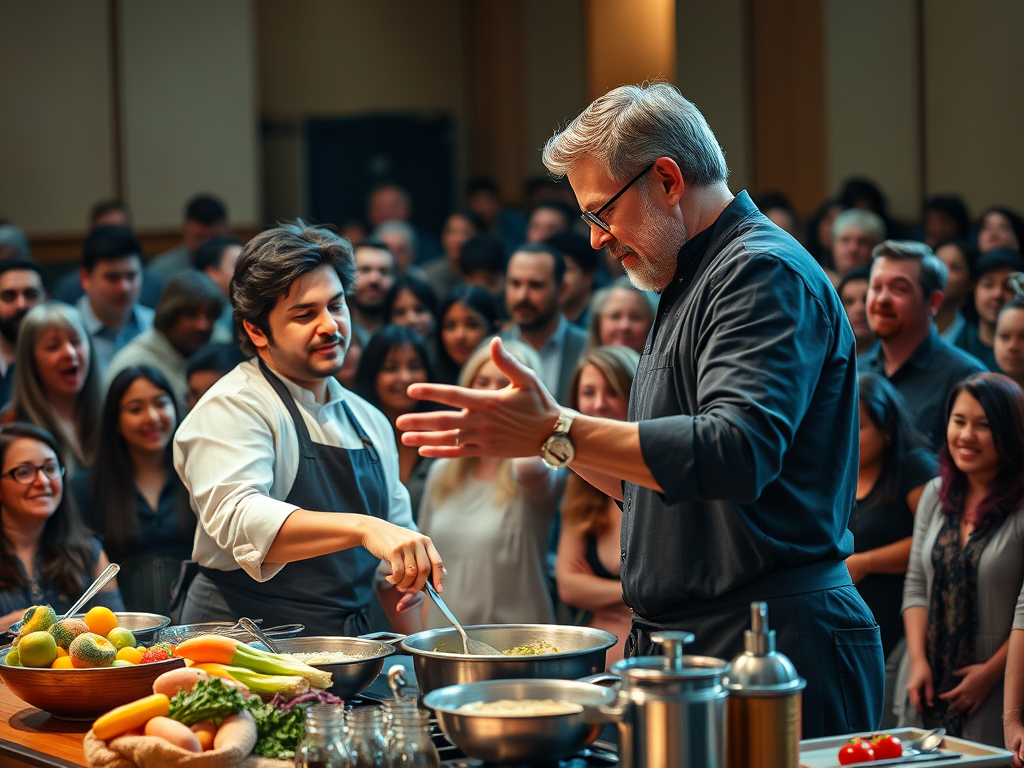
As a new member, I was rarely in the best mental space after delivering a speech.
Let me explain.
When I plan to grill something on Saturday, I pick up several pieces of mutton loin chops on Thursdays. I will then mix my marinade made up of 10 secret spices. I will let the meat sit in the marinade Thursday overnight and the whole of Friday.
Early, on Saturday I will light a charcoal fire. Nicely brown the chops and then wrap them in foil to cook slowly for several hours until they are tender.
It is the best meal I can put together and I hope that people will enjoy it.
Preparing my first speeches felt exactly the same. It took work. I would spend hours writing and rehearsing.
You probably know the nerves as you come into the hotel and up the stairs and wait for the meeting to start and then wait for your turn to be introduced.
So during the break, after I had delivered my speech, I’d scan the room, watching faces, trying to read the reactions.
I would be looking for someone to say, “Dude! You cooked!”
Well after my third speech in Toastmasters, someone walked up to me and she said, “Your speech was nice, but…”
And as soon as I heard the word “but,” I knew it was downhill from there.
“Your speech was nice, but it lacked something.”
Let me explain how her comment felt to me. Over the last weekend I searched YouTube for how to make Dor Wet and I realised two things. First, I am glad no one will ever ask me to make it because it looked like really hard work. Second, if I was to make it for you and I found leftovers in your plate… I am a peaceful man but I think I would use the F-word. Not out loud but in my heart and in my mind.
To a novice speaker, her comment felt like she brought me her leftovers of the meal I had prepared and said, “Dude! You tried but you did NOT cook.”
Anyway, I reached out to this person with my next speech, hoping for guidance—hoping they’d help me figure out how to add that missing “something.”
What did I get?
Grammar corrections. Punctuation fixes. Swap a semicolon for a period.
Basically… a ChatGPT response before ChatGPT was invented.
An AI can’t understand what it’s like to fall short of the image of the confident speaker you want to be—and not know how to get there. What I needed was a mentor who could see me as I was, and also who I was trying to become.
I felt like that first mentor saw my mistake—but didn’t see me. That wasn’t my best mentorship experience.
My best mentorship experience started in Kampala, during the 2019 District Conference. I was staying in an Airbnb with four other Toastmasters. While they went out clubbing in the evenings, I stayed in to study for a financial analyst exam.
One evening, one of them came back early.
We started talking. She asked about what I was studying, my interests, and what kind of books I liked to read.
Then, casually, she offered a suggestion:
“Maybe try reading or listening to fiction. It might help you add more flavour, imagination, and storytelling to your speeches.”
Basically, she had heard me NOT cook during a past club meeting, but rather than focus on my mistakes, she had sought to know me and in the process helped me become a better version of myself.
I felt seen and I asked her to be my mentor.
Did she help me put that missing “something” in my speeches?
Not immediately—and not even by the time our mentorship ended.
But she helped me put all of myself into my speeches. And with her support, public speaking became something I genuinely enjoyed.
And for me… that was enough. Enough to grow in confidence. Grow to the point where I have delivered several speeches where I told myself, “Dude! You cooked!”
She taught me that mentorship isn’t about pointing out weaknesses—it’s about assuring someone that growth is possible.
It’s not about handing out resources—it’s about building a relationship that supports transformation.
The next time you watch a new Toastmaster deliver their speech, remember: they’ve just served the best meal they could put together at that point in time.
Approach them like someone who finished the whole meal and is going back for seconds.
Get to know who they are, what the experience was like for them, and how they feel about the speech.
And in doing so, you’ll begin to see who they can become.
Because for most people, that’s enough.
Enough to help them grow in confidence. Enough to keep them standing in front of an audience and cook.






 Speeches by Nduati
Leave a comment